
Exclusive Interview with James Piscitelli, Maria Fe Picar, Anthony Wright, Connor Britton and Cindy Mich
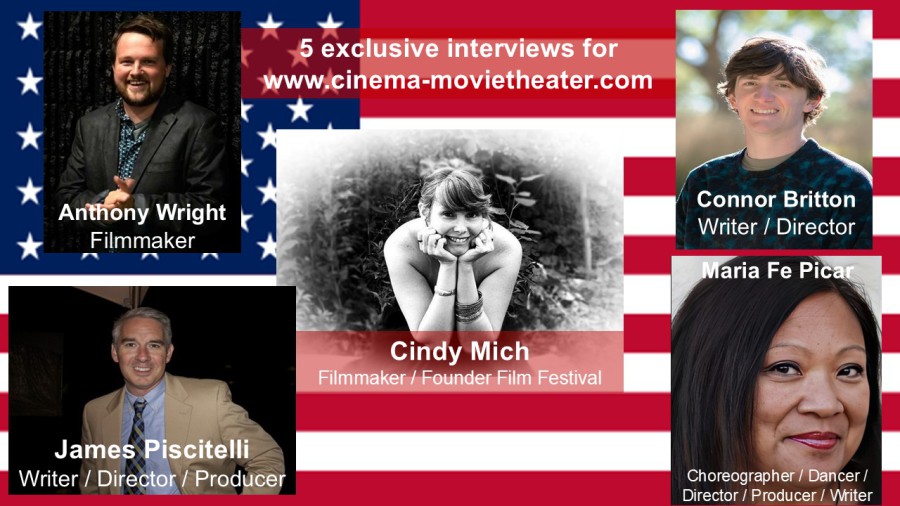
- James Piscitelli : Writer / Director / Producer
- Maria Fe Picar : Choreographer / Dancer / Director / Producer / Writer
- Anthony Wright : Writer / Director / Producer / Actor
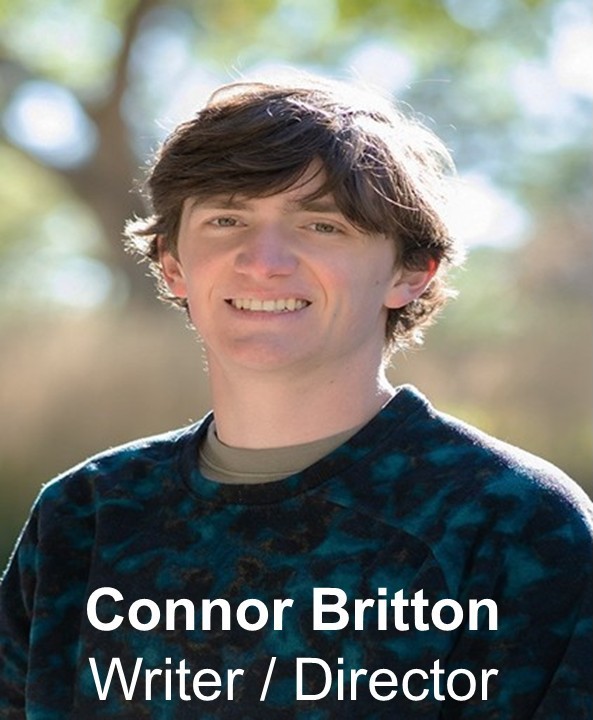
- Connor Britton : Director
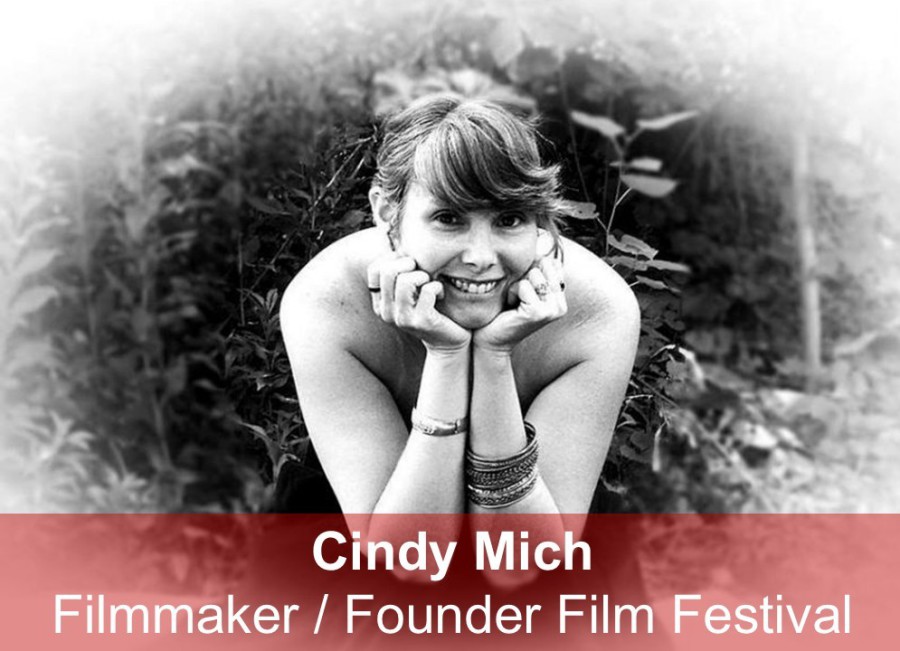
- Cindy Mich : Award-winning journalist / media personality and published author. Filmmaker and Founder of the NYC based Independent Film Festival, Art
By Jean-Paul
Eliard
The 31 January
2026
Hi.James, Maria, Anthony, Connor and Cindy First of all, I'm very happy to be doing this interview and Thank you at Cindy Mich
Jean-Paul Eliard : Could you introduce yourself to the visitors of cinema-movietheater.com?
James Piscitelli : I am James Piscitelli, a writer/director/producer of micro-budget films that are a little weird, surprisingly human, and usually funnier than
I originally planned. My work ranges from the intense feature, The Ninth Circle, — shot over twenty-five brutal days in conditions that tested all of us —
to mockumentary comedies like Larry Armstrong: Amateur Astronaut and the very weird Jerry Tarpini: Fitness Expert. I’m currently developing Open Concept, which is exactly the chaotic renovation
comedy it sounds like.
Maria Fe Picar : My name is Maria Fe Picar, and I am an actress, choreographer, dancer, director, producer and writer.
I am also the Co-Founder of Asian Mainstream Productions, a production company that highlights diversity and Asian talent. I have taught pre-school for twenty years, hosted a non-profit called The
OMI Cultural Participation Project in San Francisco, and owned my own dance/creative arts studio entitled Ingleside Creative Arts.
I currently work with my crew in productions that are shorts, commercial or features and teach Yoga at my local community centers and libraries in the Portland Metro area.
Anthony Wright : My name is Anthony Wright, and I am an Independent Filmmaker based in Northwest Ohio. For as long as I can remember, visual storytelling has been my
greatest passion.
I specialize in capturing weddings, sporting events, promotional material for schools and businesses, and so much other exciting content on video.
Connor Britton : My name is Connor Britton. I am a writer and director currently studying at the Savannah College of Art and Design. I am a senior on track to
graduate this Spring
Cindy Mich : My name is Cindy Mich, and I am an award-winning journalist/media personality and published author.
On the film side, I am both a filmmaker and Founder of the NYC based independent film festival, Art is Alive, now in its eighth year.
In print, I currently contribute to two digital publications, along with owning and operating my own publication, Elegant Expressions Magazine. My reach between print and my radio broadcast is
approximately 300,000.
I also am regularly called upon to cover film premieres/festivals, events, product launches, and so on.
I also serve as a publicist for filmmakers/actors and small business owners. Finally, my public access TV talk show, Cin's Chat Corner, holds 2.5 million subscribers across seventeen
states.
Jean-Paul : How long does it take to write a screenplay?
James : If you mean the first draft —
usually a couple of months. If you mean the version that is ready to present — longer than my first draft. Rewriting is where the real story shows up, and that takes patience and
honesty.
Maria : It depends on if it will be a
short or feature film. Shorts usually take a week or two if I have a story already in mind, and if not. it can take up to a couple of months.
Features for sure take longer - at least a couple of months if I really hunker down, and longer if I happen to get stuck or are still marinading on an idea to see if it works or not. I also
collaborate with other writers and so it is up to their schedule as to when we can write together.
Anthony : Writing a Screenplay
can sometimes take a day, or other times, up to two years.
Connor : Usually, a script can take me
anywhere from a couple of days, to multiple months depending on my workflow. That is, of course, referring to short film screenplays.
I have not yet tackled a feature script, although I do have a few ideas. I get very particular about everything in my scripts, which can often cause them to continuously change up until the day of
shooting.
Cindy : It depends on the
subject matter, coupled with how well I balance my time between the demands of my personal and professional life. If my family has needs or my magazine or TV show must get out, that takes precedence
over my screenplays.
Further, if a client is paying me to write this versus a passion project for myself, the client is the top priority. The last two screenplays I have been working on are very emotionally heavy, and
they have been spanning around nine months to write. The one comedic screenplay I did took two months.
Jean-Paul : Can you tell us how you choose your actors / actresses?
James : I look for performers who
initially embody the physical description of the character. I then look for what extra the actor brings to the audition; something unexpected or a direction that is original.
Next, I look for an actor that can listen, and not just act. This is especially important in comedy or mock documentary setups.
You need people who are present, responsive, and willing to take the scene to unexpected places without derailing it. For The Ninth Circle, we balanced that with very gritty dramatic performances —
it’s all about serving the tone.
Maria : I choose my actors and
actresses based on their track record with me. Usually, I have done productions with them before either as an actress myself, or as a producer or director and have seen how they work.
I always value actors and actresses that respect being on time, provide instant and constant communication, and know not to "overstep' their boundaries and keep within the roles for which they signed
up.
Anthony : When the audition process
commences, I have any potential talent interested in playing a roll in my projects send me a monologue of their choice. Based off of the monologue they send, I have them read off sides for specific
roles.
If I feel like their side reading goes well, I will have that actor play the specific character. This process can take up to four months, but it is worthwhile!
Connor : Previously, I have just asked
peers or friends to act in my projects. For my most recent project, I outsourced to Backstage, as well as SCAD's own internal casting office.
Cindy : My process for picking actors
and actresses is vastly different from the so-called norm within the industry. Usually, a casting director will want a reel, several headshots, social media numbers, a self-taped audition, and IMDB
information.
For me, I require a whole three things: no headshots, a reel, and an in person, informal audition. My personal belief is that a professionally done photo is not exactly what I meet in person.
I am not casting a picture – I am casting a human being. Secondly, a reel helps to get some background as to performance and skill set.
However, seeing one act in person allows for more authenticity, connection, and genuineness to the performance.
Anyone can “act”, but I want to work with performers who personify passion, creativity and originality.
Jean-Paul : How long do shoots last?
James : It depends on the project. The Ninth Circle, being a feature, shot for twenty-five days — and we were tested every step of the way with weather, logistics, and
tone. Shorter projects like Larry Armstrong wrapped in a few tight days, but all of them demand a crew that is nimble and ready to solve problems fast.
Maria : This again depends on a short or feature. I have been known to shoot a "short" on a weekend and a feature can take up to two, three years or more. This always depends on schedules, locations, and script changes.
Anthony : Sometimes, shoots take about
thirty minutes. Other times, they can take up to eight hours or longer.
Connor : Shoots have only taken three
or three days for the short films I have made. Things have gone well enough during principal filming to not require reshoots or anything. No guarantee it will always go that well.
Cindy : The length of a film
shoot depends on the budget, availability of locations and actors, and number of reshoots needed before sending this to editing. If all of these are well planned and readily available, a shoot can be
completed within a weekend. If locations and actors fall through, it could add weeks or months to a project.
The longest I have ever worked on a film project was two years, as Michael passed and I refused to finish the project for quite some time.
Jean-Paul : How do you choose the films you are going to realize?
James : It starts with a situation, and
we then put a character or characters into that situation. This leads us to obstacles and questions that challenge and test the characters.
Open Concept began as “What if a couple’s renovation gets sabotaged by a cunning mouse?” The Ninth Circle began with a dramatic idea that wouldn’t let me go. What if an apathetic and disconnected man
was forced to engage with others in a post-apocalyptic world? Would he engage or run away?
If the premise makes me curious beyond the first laugh or shock, that is usually a good sign.
Maria : No response
Anthony : Recently, I have been
gravitating towards the comedy/drama genre.
If I can come up with an interesting premise, I will make sure to include plenty of comedic and dramatic elements in the script.
Connor : I think it kind of comes from a gut feeling. When I know an idea is worth the time and effort and has a message I am proud to share. I am not one to pour a lot of time and effort into a project that doesn't deserve it.
Cindy : Typically, whenever I
have considered making a film, it is usually because there is a personal connection that I feel with the content.
Either it is about a subject in which I am passionate about, or a person who has a concept that should be seen by a larger audience. For instance, my friend and client
Ben Lesser did a memoir about his life story. In 96 years, he managed to become the CEO of a non-profit, an author, public speaker and also survived four death camps and two death trains during the
Holocaust.
My motivation for wanting to do this screenplay/film is that there likely will never be another person I meet who is this inspiring or motivating. This is a project that has huge heart value, and for
me, that outweighs everything else.
Jean-Paul : What made you want to become a filmmaker?
James : When I was a kid, I watched
Steven Spielberg being interviewed on television and realized that one person could make totally different movies — big, small, funny, dark — and that hit me sideways.
I wanted to live in that playground of ideas. It took years of balancing other careers before I gave myself permission to actually do it, but once I started, there was no turning back.
Maria : My motivation as a filmmaker
came when I started acting and saw that a lot of productions did not have diversity in their actors, actresses, or even crew members.
This enabled me to initiate my production company, Asian Mainstream Productions. This is a full spectrum production company that produces films, videos, commercials and theater with diversity
in mind and highlights Asian talent.
Anthony : Since I was a kid, I’ve always been fascinated with storytelling, whether that be writing short stories, comic books, or films. The process of telling an engaging story has always intrigued me!
Connor : I have always really enjoyed
creating art across a ton of different mediums. I've also always enjoyed watching movies. I think I was in high school when I really started to view film as more of an art form than purely just
entertainment.
So much of what I grew up loving was in film, and it could be synthesized into something grander. Being able to create emotion from visuals is fascinating, and I aspire to get really good at
it.
Cindy : I honestly never wanted to be a
filmmaker. Once I started covering films/filmmakers through festivals and my publications, I grew a finer appreciation of film and those who create this art form.
However, that was not enough to sell me on making my own movies. That happened when I met the love of my life, actor Michael Gentile.
There came a point where I wanted to keep finding ways for us to be together, and working within the same platform helped us to have more time.
I found myself writing a film and a series for us to star in together, and that we did. Once he passed in 2021, I have slowly lost any desire I had to make films at all.
Jean-Paul : What is your next challenge / project?
James : I’m deep in pre-production with
Open Concept — a mockumentary comedy about a couple renovating their starter home while battling an unapologetically clever mouse. It’s a bigger scope than my earlier mockumentary shorts, but it’s
built from the same core: character, chaos,
and a bit of absurdity.
Maria : My next challenge or project is
a Martial arts feature film comedy called Bushido Boy and a web series based on a Filipino Chef entitled Fork and Spoon.
Anthony : I am currently in
pre-production for my next feature length film titled “The Moonshine Crew”. The film tells the story about a down and out bartender who comes across an action camera with footage on it that changes
his life forever. The story is backed with comedic, dramatic, and romantic elements.
Connor : My next project will be my
Senior Thesis. It is a "meet the parents" sort of family dinner short film that immediately gets weird from the get-go.
Everyone is required to wear blindfolds while they are in the house. The boyfriend eventually decides to remove his blindfold, and in doing so sees something he's not supposed to. It's a dark
comedy.
I am already well into pre-production. The script is "done" but will definitely be tweaked and edited endlessly. I'm super excited for it and I have a great crew lined up.
Cindy : The next project I am taking on
is one for my own personal healing.
I have spent the last four years attempting to heal from the loss of my partner. One of the largest struggles I have had is forgiving myself.
I took responsibility for his care and ultimately made some of his final decisions for him. As he is now deceased, I believe that I am in part to blame for this result. Hence, I am going to make a
short film that documents our love story, cancer journey and shows myself and the audience the ways I was able to save him while alive.
The title is “Saving Fancy Face”, and it is being filmed in 2026. I am also pitching all mainstream media networks concerning a thirty-minute talk show
I would like to host.
Jean-Paul : Is there anything else you would like to add?
James : Filmmaking is mostly controlled
chaos and problem-solving in disguise. The glamour is great in theory, but the real joy comes from fixing things that break, laughing at things that shouldn’t work, and making something people feel
connected to in some way.
I also believe this is a great time to make films, as the equipment is cost-effective and accessible. Moreover, as streaming and viewing evolves, the opportunity for people to see small and different
films just keeps getting better.
Maria : I am finishing up my feature
film anthology called Soap Operas For Seniors. This is about seniors living in today's society and how they navigate extended family, dating, retirement, and social media to name a few. I also
have my current web series called Shrink Spotlight, based on therapy sessions that are comedic and done solely on improvisation.
We are a collaborative company that not only produces our own projects, but other projects that include student filmmakers and paid clients. I am finishing up my feature film anthology called Soap
Operas For Seniors.
This is about seniors living in today's society and how they navigate extended family, dating, retirement, and social media to name a few.
I also have my current web series called Shrink Spotlight, based on therapy sessions that are comedic and done solely on improvisation. We are a collaborative company that not only produces our own
projects, but other projects that include student filmmakers and paid clients. More details on Maria, go to: Home - Asian Mainstream Productions
Anthony : My goal is to keep telling engaging stories and inspiring other filmmakers.
Connor : Thank you for the interview!
Cindy : If anyone should wish to contact me directly, here are all the various platforms.
Thank you very much for your interviews, and I wish you all the best.
- James, visit: James Piscitelli - IMDb
- Maria, go to: Home - Asian Mainstream Productions
- Anthony can be found here: Anthony Wright -
IMDb
- Connor are here: Connor Britton | LinkedIn
- Cindy : Website: cindy-mich-award-winning-journalist.yolasite.com,
Home TV Show: Interviews - Cin's Chat Corner TV Show
Film Festival: Art is Alive Film Festival - FilmFreeway
FB: Facebook | LinkedIn: Cindy Mich | IG: Cindy Mich (@officialcindymich) • Instagram photos and videos



My English blog

 Version imprimable